Dispatched Immediately, On Site In About An Hour
One call triggers dispatch. Trucks run the Capitol Boulevard and I-5 corridor with extraction equipment already loaded, so the truck is not being packed while you are standing in water.
Standing water right now is the cheapest it will ever be to deal with. Every hour it sits, it moves into materials that then have to be removed instead of dried.
TRUSTED BY HOMES & BUSINESSES ACROSS THURSTON COUNTY
Extraction is the highest-value hour of any water loss, and the reason is arithmetic rather than urgency for its own sake.
Water removed mechanically costs nothing beyond the time it takes to pull it out. Water left behind has to be evaporated into the air and then pulled back out of the air by a dehumidifier, which means more equipment, more days on site, and a larger invoice. Some of it will migrate into materials that then have to be cut out and replaced rather than dried.
In a place where outdoor air sits near saturation half the year, this is not a small difference. A loss where the standing water came out in hour one and a loss where it came out the next morning are frequently a two-day job and a five-day job.
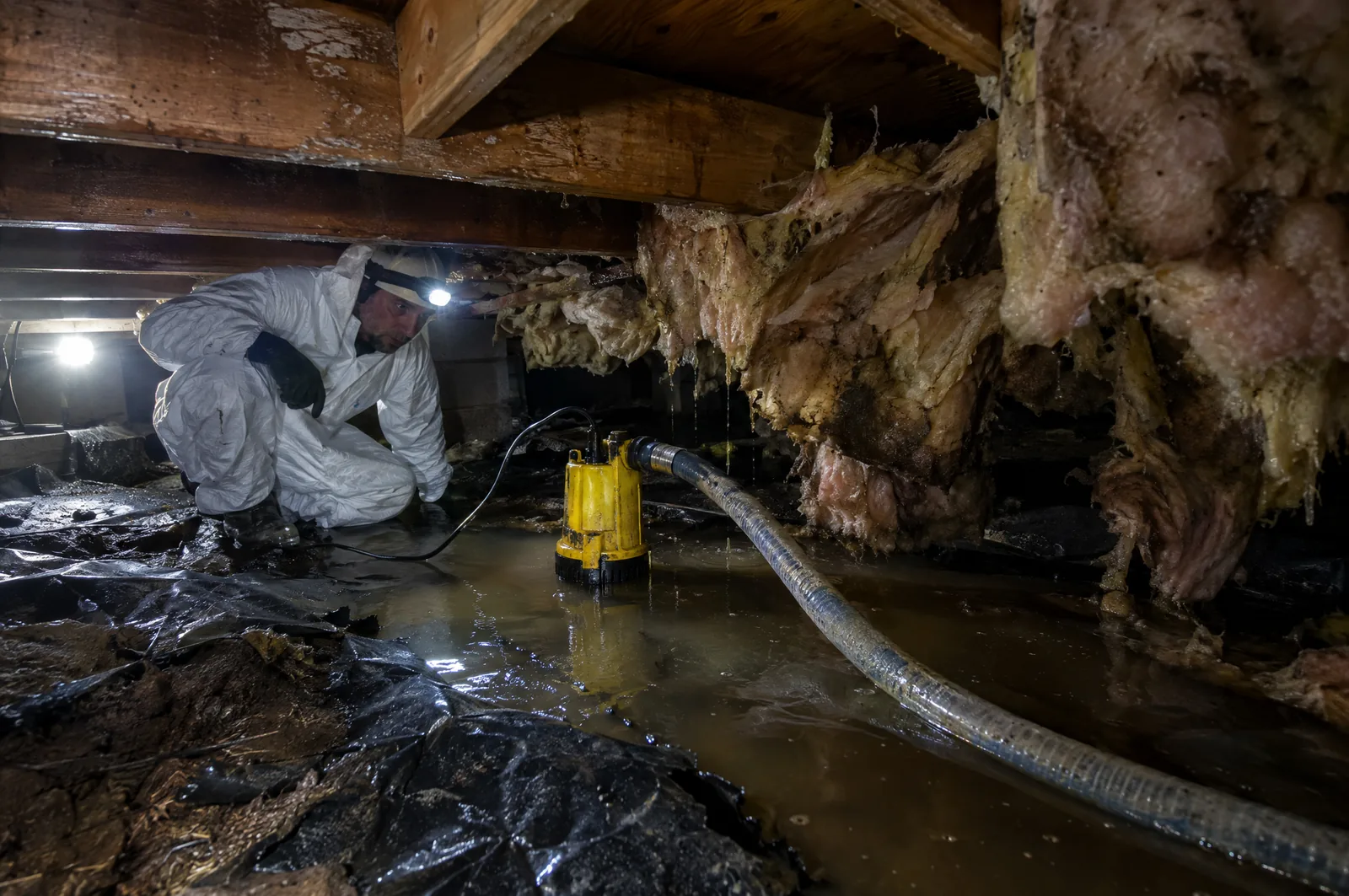
The water on the floor is the part you can see, and it is usually not the majority of it. In a typical Tumwater home, water from a supply line failure ends up in the carpet pad, inside the subfloor cavity, wicked up into the bottom of the drywall, under the cabinet toe-kicks, and pooled on the crawlspace vapor barrier under the house. Each of those needs different equipment to reach, and the crawlspace in particular gets missed constantly because it requires someone to actually go down there and look.
Water on the floor right now? Call us. 24/7 dispatch, 60-minute response across Tumwater and Thurston County, and we document everything for your claim from the first photograph.
One call triggers dispatch. Trucks run the Capitol Boulevard and I-5 corridor with extraction equipment already loaded, so the truck is not being packed while you are standing in water.
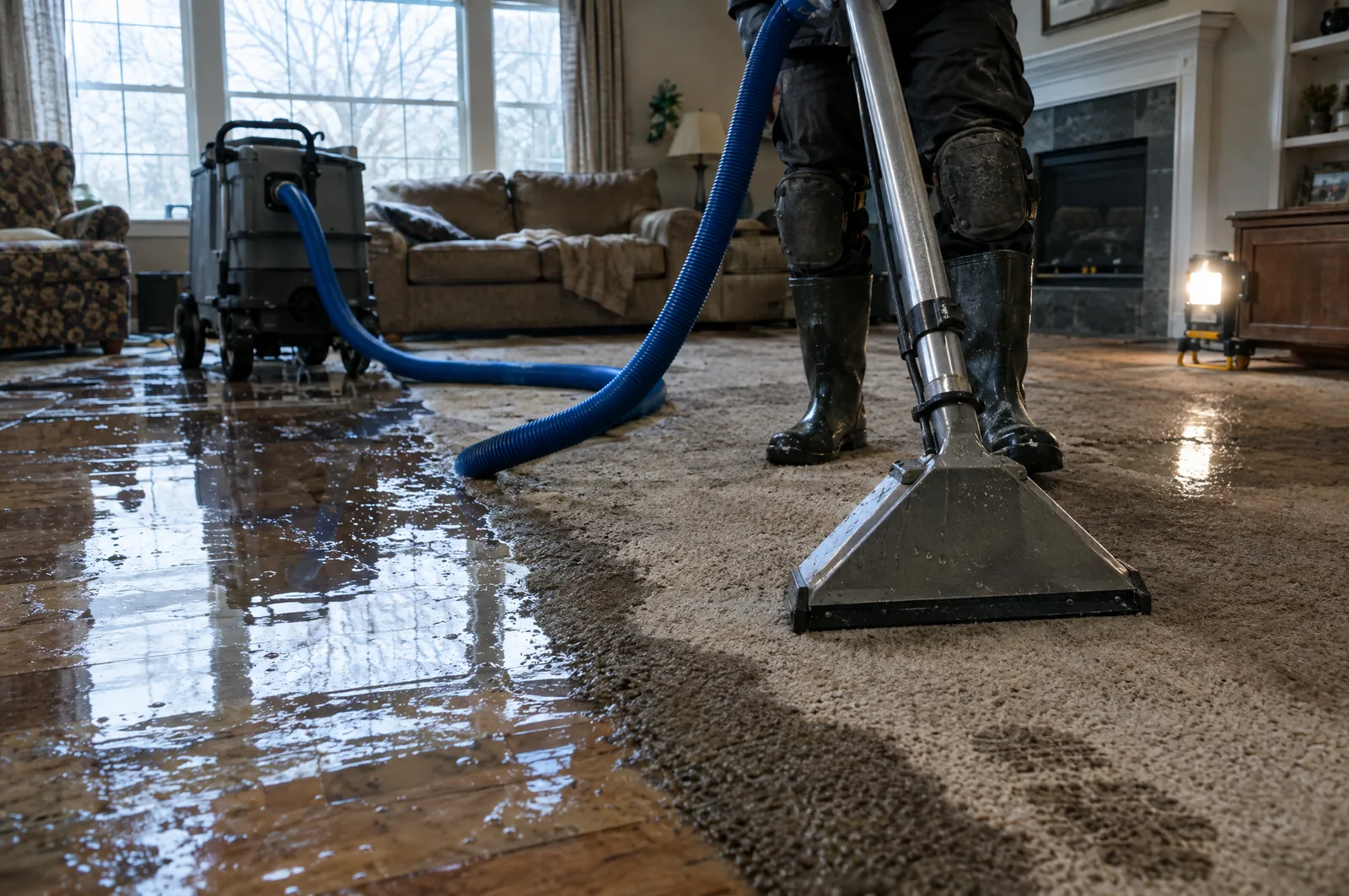
Truck-mounted extraction for volume, weighted extraction for carpet and pad, portable units for upper floors and tight spaces, and submersible pumps for crawlspaces and basements. Most of the water in a Thurston County loss is somewhere a shop vac cannot reach.
Every gallon removed mechanically is a gallon that does not have to go through a dehumidifier. This is what actually controls the equipment count, the number of days on site, and the final invoice.
If water is still running when you call, we walk you through the shutoff while the truck is rolling rather than waiting until we arrive. Stopping the source is worth more than anything else in the first ten minutes.
Conditions are photographed on arrival, before anything is touched. That baseline is what your adjuster prices against, and it is the single most common thing missing from a claim that gets underpaid.
A person answers at any hour. First question is whether water is still actively running, and if it is, we walk you through finding and closing the main while the truck is already on the road. We confirm your address and cross streets, roughly how long the water has been sitting, and what rooms and levels are involved, which tells us what to bring. Stay out of standing water if there is any chance it is in contact with electrical.
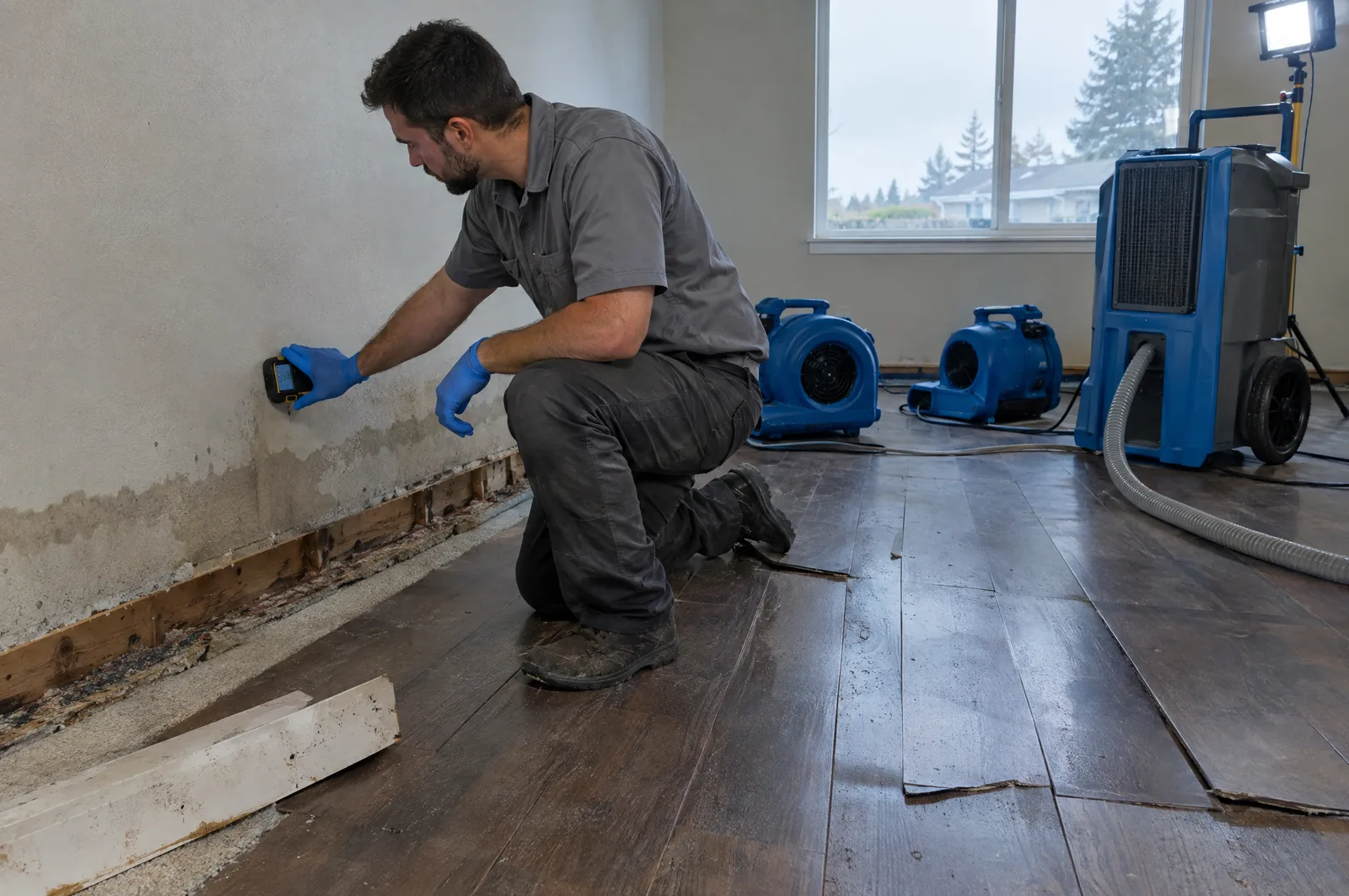
Before anything gets moved we photograph the loss as we found it and take initial moisture readings. We identify the water category, because Category 1, 2, and 3 water are extracted with different equipment and different handling, and we check where the water has already migrated to, including down into the crawlspace. This takes about fifteen minutes and it is what the entire claim is built on.
Standing water comes out first and fast. Truck-mounted extraction handles volume on hard surfaces, weighted extraction pulls water out of carpet and pad in place, and submersible pumps go into crawlspaces or anywhere water has pooled below grade. We work from the furthest migration point back toward the source so we are not pushing water into dry areas.
The water you can see is rarely most of it. We pull water out of subfloor cavities, from under cabinet toe-kicks, out of wall bases where it has wicked, and off the crawlspace vapor barrier. Where water is trapped inside an assembly we create controlled access to reach it, in the least invasive place that actually works rather than wherever is easiest.
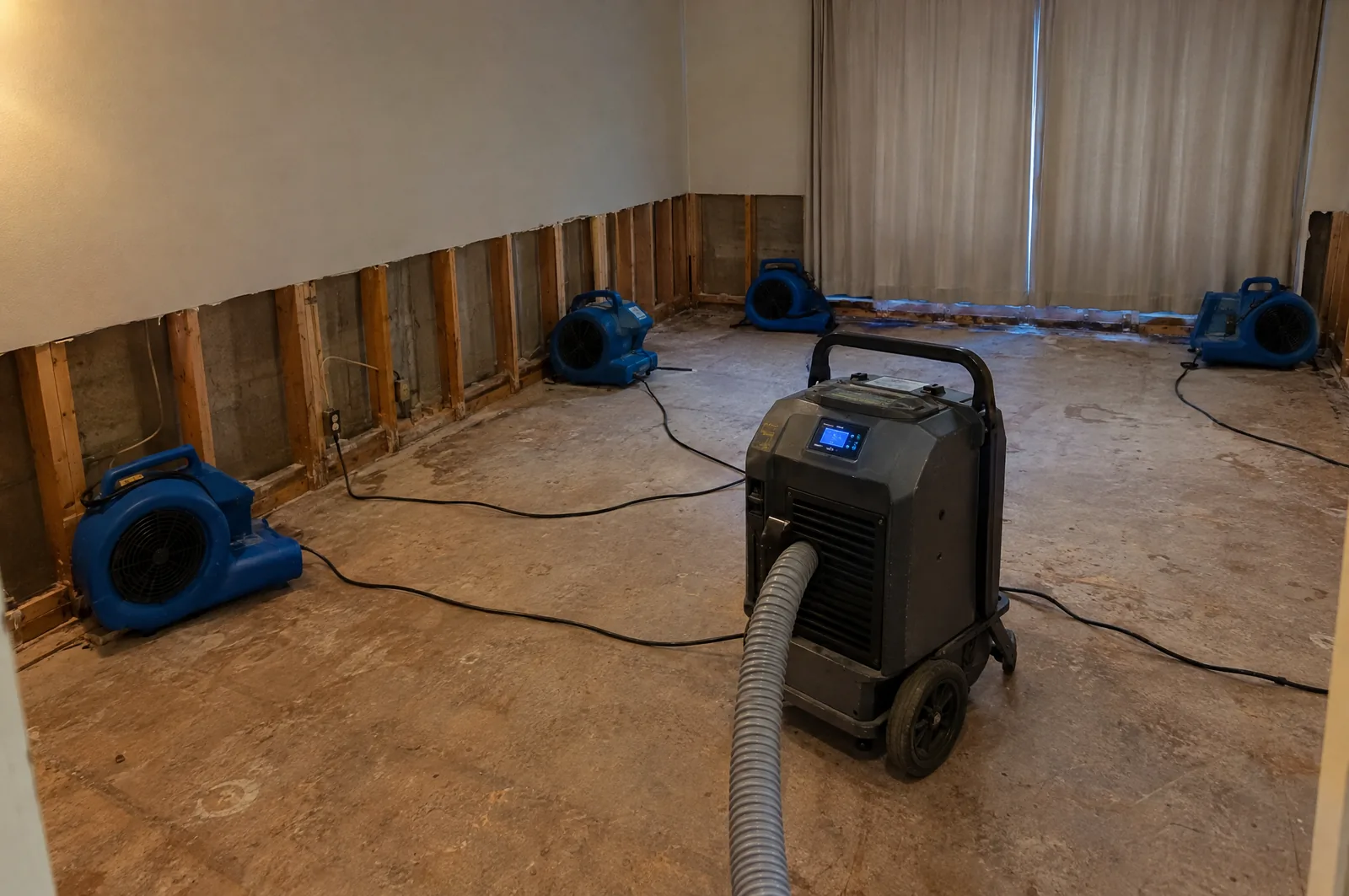
Once bulk and trapped water are out, we take a second set of moisture readings and set the drying plan: what stays, what has to be removed, and how much dehumidification and air movement the structure needs. In most cases drying equipment goes down the same visit. You get the extraction documentation and the scope for the drying phase before we leave.
Call now for 24/7 emergency response across Thurston County. IICRC-certified technicians, insurance handled.
Usually yes, and the question to ask is not how much water but what it got into. A small volume that ran under a hardwood floor or down into a wall cavity is a worse problem than a larger volume sitting on tile. In this climate nothing you leave behind evaporates on its own. If you can see the full extent of it, it is on a hard surface, and you caught it immediately, you may be fine handling it yourself.
For a contained spill on a hard surface, yes. A shop vac cannot pull water out of carpet pad, out of a subfloor cavity, or out from under a wall base, and it does nothing for water that has already gone into the crawlspace. That is where most of the water in a real loss ends up, and it is the water that causes the damage later.
Yes, and it is one of the most common calls we take in Thurston County. We pump it out with submersible equipment, remove saturated insulation and damaged vapor barrier, and dry the underfloor space to standard. Water that is left down there does not drain away on its own in this soil and it keeps the subfloor above it wet indefinitely.
Two to six hours for most residential losses, depending on square footage, how many levels are involved, and how much of the water has migrated into assemblies. Extraction is normally the same visit as the initial assessment, and drying equipment usually goes down before we leave that day.
Do not hurt yourself doing it. If you can easily lift small items off wet carpet or put foil or blocks under furniture legs to stop wood stain bleeding into the carpet, that helps. Anything heavy, wait for the technician. Do not start pulling up carpet, because lifting it wrong tears the pad and spreads contaminated water into areas that were dry.
Crawlspace water removal in Tumwater: pumping, saturated insulation tear-out, vapor barrier replacement, and documented drying of the underfloor space.
Learn moreDocumented structural drying in Tumwater: LGR dehumidification, calculated equipment placement, and daily moisture readings to a verified dry standard.
Learn moreTumwater water damage restoration: emergency extraction, IICRC-certified structural drying, and a documented file for your insurance claim.
Learn moreOpen 24/7 - Emergency Dispatch