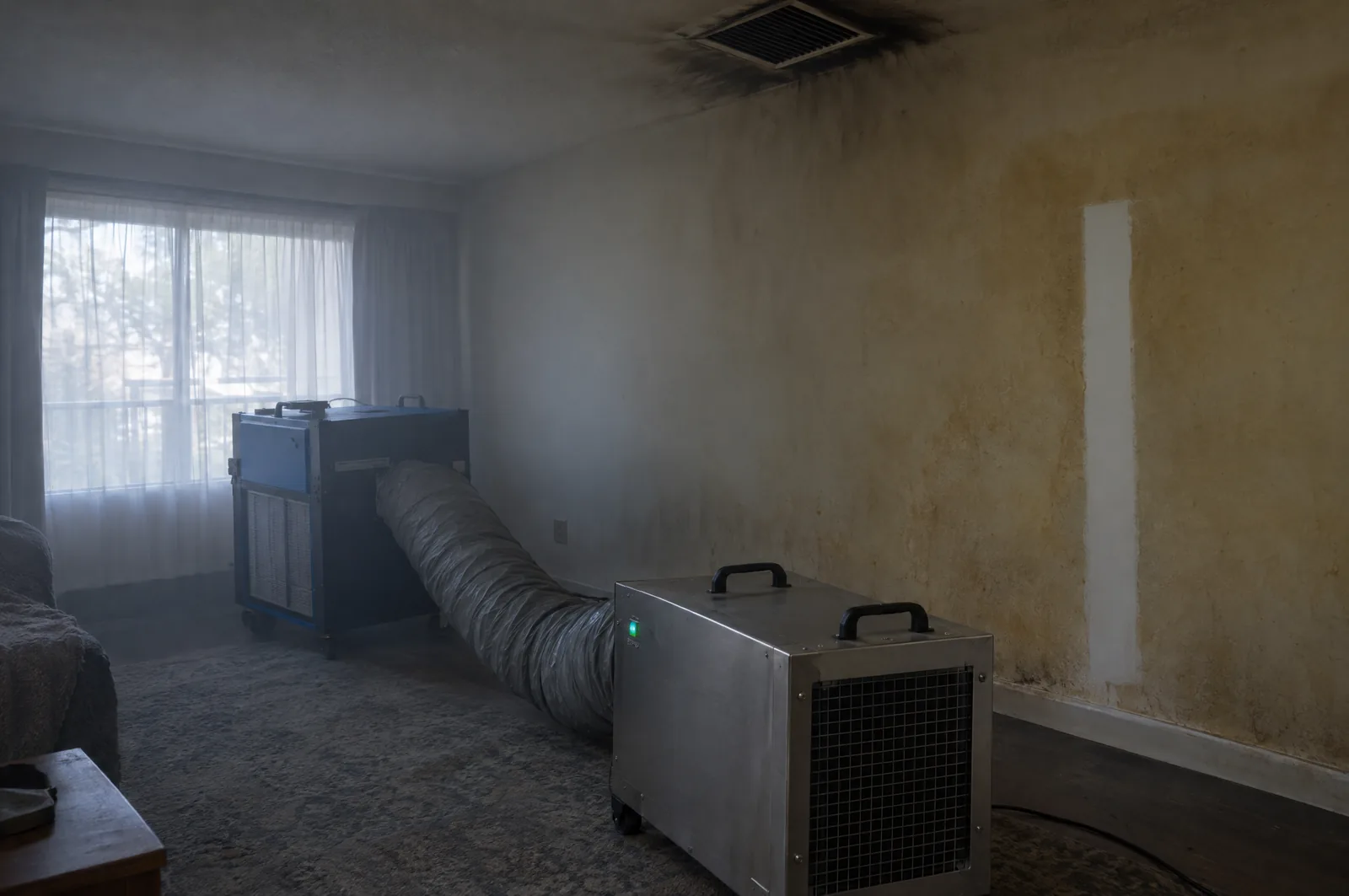
Hydroxyl generator and HEPA air scrubber with ducting running in a smoke-damaged room, with soot staining around the ceiling vent and a clean wipe test strip on the wall
Eliminated, Not Masked

Smoke & Odor Removal In Tumwater, WA

Odor is not a smell hanging in the air. It is physical residue on and inside your materials, which is why air fresheners and ozone alone never hold.

TRUSTED BY HOMES & BUSINESSES ACROSS THURSTON COUNTY

Overview

Smoke Damage Cleaning & Odor Removal After A Fire

Odor is not a smell floating in the air. It is physical residue sitting on your surfaces and absorbed into your porous materials, releasing continuously. That single fact explains why almost every DIY attempt fails.

Why The Smell Came Back Last Time

If you have already tried something, it was probably an air freshener, an ozone generator, or a cleaning service, and it probably worked for two or three weeks. Here is what happened.

The treatment addressed odor molecules in the air and on exposed surfaces. It did not remove the residue inside the drywall, in the insulation, in the carpet pad, or coating the inside of your ductwork. That residue kept releasing. Once the treatment dissipated, the source was still there, still working.

You cannot deodorize your way past residue that is still present. Source removal first, treatment last, every time.

The Duct System Is Usually The Culprit

Smoke moved through your house on air currents, and a running HVAC system is the biggest air current in the building. It pulled smoke in, pushed it through every duct run, and coated the inside of the system.

Clean every room perfectly, leave the ductwork alone, and the first cold night undoes the whole job in about twenty minutes. If your smoke odor reliably returns when the heat kicks on, this is why.

Residue Type Decides The Method

  • Dry smoke — fast, hot, wood-fed fire. Powdery residue, cleans relatively well, travels far.
  • Wet smoke — low, smoldering fire involving plastics or rubber. Sticky, smeary, strong odor, and it will spread permanently across a surface if cleaned with the wrong method.
  • Protein residue — kitchen and cooking fires. Nearly invisible, extremely pungent, bonds tenaciously, and gets scrubbed deeper by well-meaning homeowners.
  • Furnace puff-back — oily soot distributed through the entire duct system. Common through Western Washington heating season.

Matching the method to the residue is not a nicety. Using the wrong one is how a cleanable surface becomes a replacement line on the claim.

Get Help Now

Call us. We identify the residue, remove the source, decontaminate the HVAC, and then treat. 24/7 across Tumwater and Thurston County.

Scope of Work

What Our Smoke & Odor Removal Service Includes

Source Removal First, Treatment Last

The order is not a preference, it is the whole job. Deodorizing over residue that is still present is the single most common reason smoke odor returns a month later, and it is why so many people have already tried two things before they call us.

Residue Type Identified Before Anything Is Cleaned

Dry smoke, wet smoke, protein residue from a kitchen fire, and furnace puff-back each need a different method. Using the wrong one drives the residue permanently into the surface, which turns a cleanable item into a replaceable one.

HVAC Decontamination Included In The Scope

Your ductwork carried the smoke through the house and it is holding residue. Cleaning every room and leaving the system alone means the furnace redistributes the odor on the first cold night. It is the most commonly skipped step in a smoke job.

Hydroxyl And Thermal Fogging Matched To The Job

Hydroxyl generators are safe to run in occupied spaces and work more slowly. Thermal fogging penetrates the way hot smoke originally did and requires the space to be vacated. We choose based on severity, materials, and whether you need to be living there.

Wildfire Smoke Intrusion Too

Late summer smoke events push fine particulate into homes through ventilation and envelope leakage. It settles in soft goods and the HVAC system and lingers long after the outdoor air clears. It is a different profile from structure-fire smoke and it responds to a different approach.

How It Works

Our Smoke & Odor Removal Process, Step By Step

  1. Step 1

    Assessment And Residue Identification

    We map how far the smoke actually traveled, which is almost always beyond where anyone expects, because smoke follows air pressure and the HVAC system rather than staying near the source. Then we identify the residue type on affected surfaces, since dry smoke, wet smoke, protein residue, and furnace puff-back all clean differently. We check the ductwork, the insulation, and any porous materials that have absorbed residue, and we scope it room by room.

  2. Step 2

    Source Removal

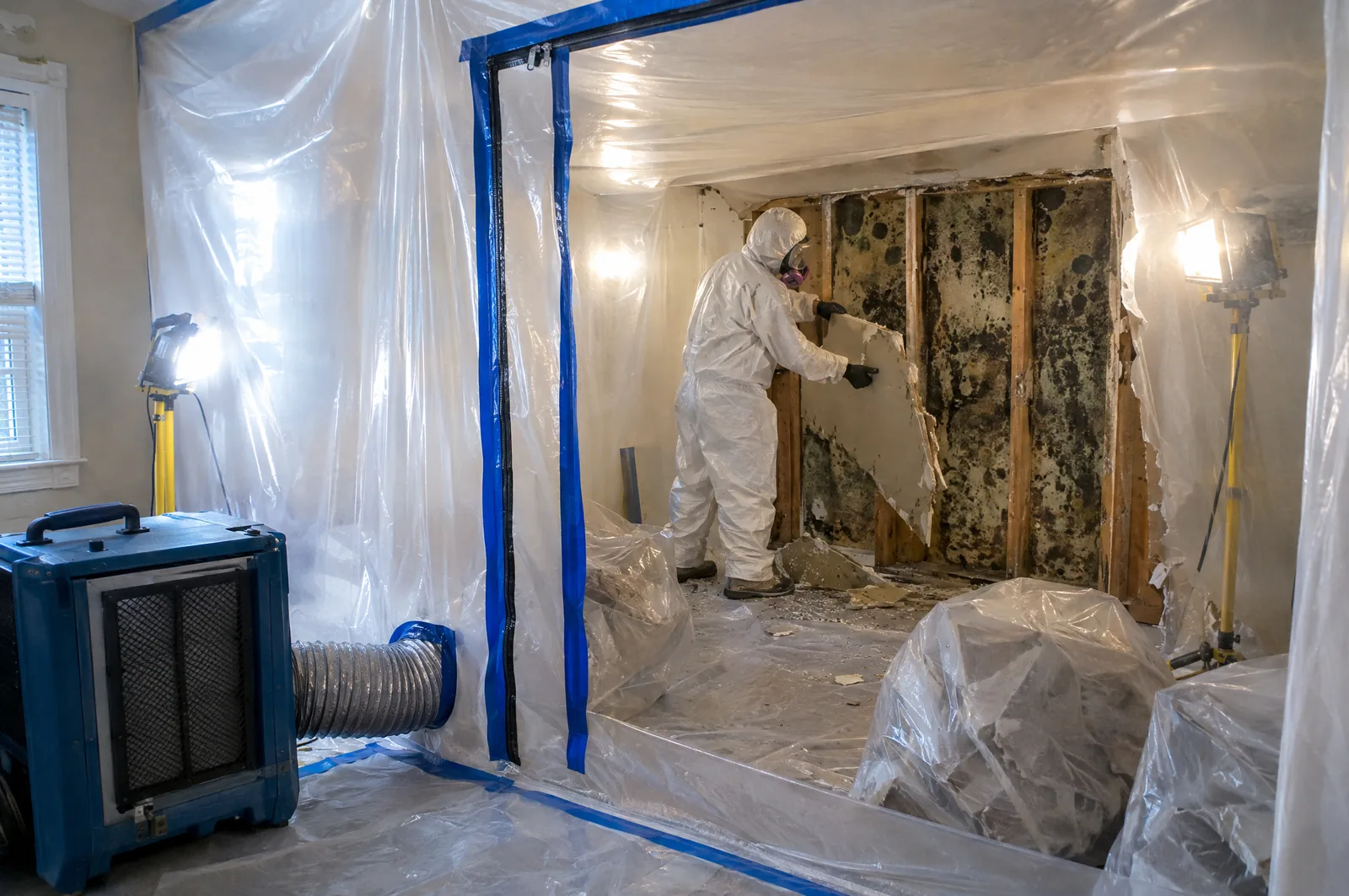
    Anything holding residue that cannot be cleaned comes out: charred material, saturated insulation, affected carpet and pad, and porous finishes that have absorbed too deeply to recover. This happens under containment where needed so demolition does not push residue into parts of the house that are clean. This step is the majority of the actual odor result, and skipping or shortcutting it is why previous attempts failed.

  3. Step 3

    Surface Cleaning To Residue Type

    Every affected surface gets cleaned with the method its residue calls for. Dry smoke is cleaned differently from wet smoke, and protein residue needs a completely different chemistry from either. Contents and soft goods are treated or sent out for specialty cleaning. Where a porous material cannot be fully cleaned and removing it is not practical, it gets sealed so residue cannot continue to off-gas.

  4. Step 4

    HVAC Decontamination

    The duct system gets inspected and decontaminated, and filters are replaced. This is the step most often skipped by whoever came before us, and it is why odor returns on the first cold night when the furnace runs. A system full of smoke residue will recontaminate a house you just spent a week cleaning, in about twenty minutes.

  5. Step 5

    Treatment And Verification

    Only now does the odor treatment go in. Hydroxyl generators run in occupied or occupiable spaces over a longer period. Thermal fogging penetrates porous materials the same way hot smoke did originally and requires the space to be vacated during treatment. We choose based on severity, materials, and your situation, then verify by walkthrough and by letting the space sit closed before rechecking, because odor that has been genuinely eliminated stays gone when the house is shut up for two days.

24/7 Emergency Response

Ready For Smoke & Odor Removal?

Call now for 24/7 emergency response across Thurston County. IICRC-certified technicians, insurance handled.

FAQs

Smoke & Odor Removal Questions From Tumwater Homeowners

  • Ozone works on odor molecules in the air and on exposed surfaces, so it can help as part of a process, but on its own over unremoved residue it is temporary and the smell returns within weeks. It also has real drawbacks: it is unsafe to breathe, spaces must be vacated and then aired out thoroughly, and it degrades rubber and some plastics with repeated use. We generally prefer hydroxyl, which is slower but safe to run in occupied space. Either way the treatment is the last ten percent of the job, not the job.

  • Nearly always one of two things. Either residue is still present somewhere it was not removed, commonly inside wall cavities, in insulation, or in a porous material that was cleaned on the surface only, or the HVAC system was never decontaminated and is redistributing residue every time it runs. The clue is usually timing: odor that returns when the heat comes on points to the ductwork.

  • Most textiles and upholstery, yes, though it often requires specialty off-site cleaning rather than surface treatment in the house. Mattresses and heavily absorbent foam items are the usual exceptions, because residue penetrates too deeply to reach. We assess item by item and tell you honestly what is worth treating versus what should go on the claim as a replacement.

  • It is the same category of problem and it is common here through the heating season. An oil or gas furnace puff-back distributes an oily soot through the entire duct system and out into every room. It is a wet-smoke type residue, which smears badly if cleaned with the wrong method, and it always requires full HVAC decontamination because the system itself is the source.

  • Different profile, same principle. Wildfire smoke intrusion during a late summer event deposits very fine particulate that settles into soft goods, carpet, and the HVAC system, and it keeps producing odor after the outdoor air has cleared. It responds well to HEPA filtration, soft goods cleaning, duct decontamination, and hydroxyl treatment. It generally does not require the demolition a structure fire does.

24/7 Emergency Restoration

Don't Wait. Call Now.

Open 24/7 - Emergency Dispatch

Tap To Call (877) 524-6411