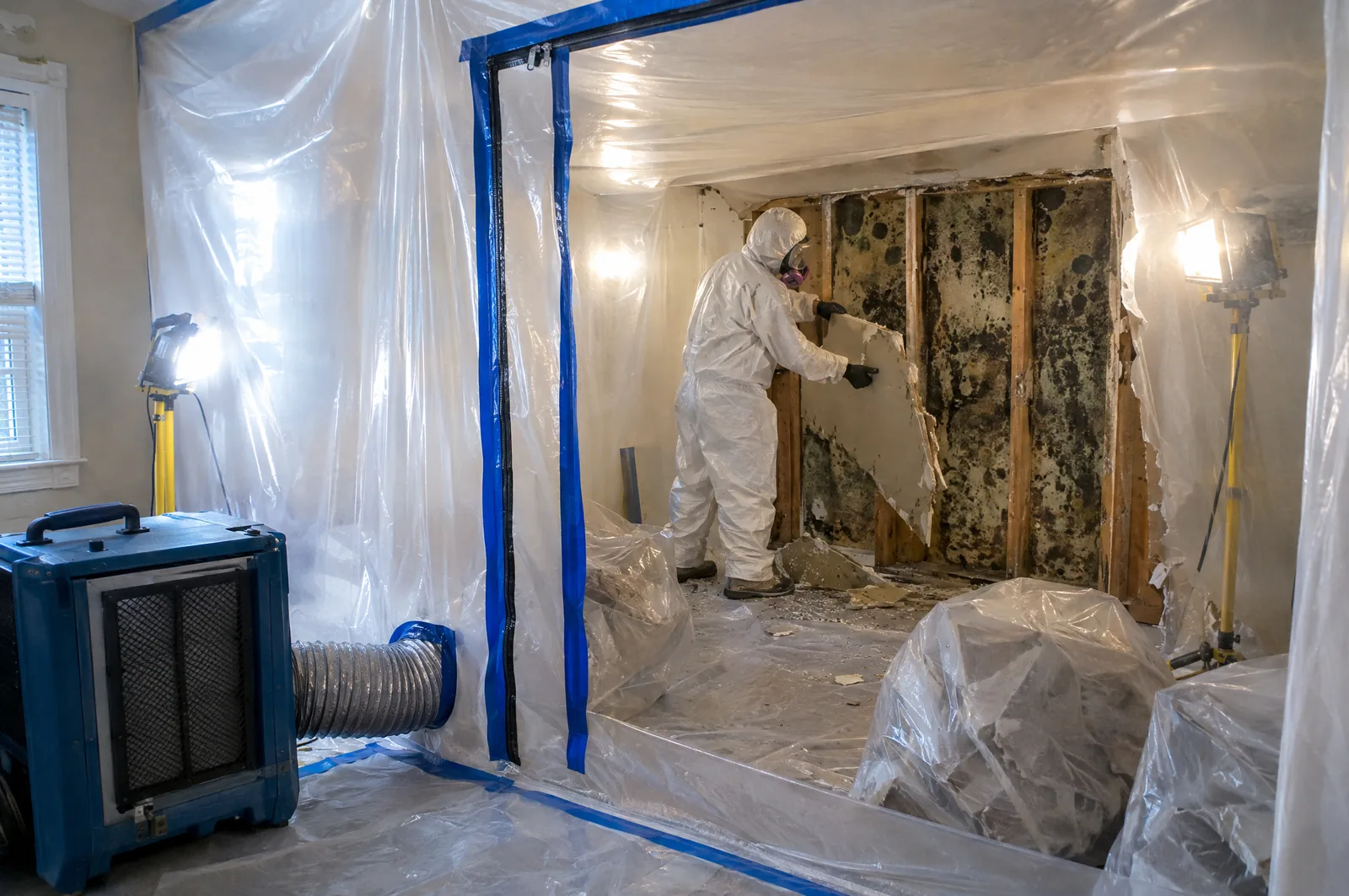
Technician in full PPE removing moldy drywall inside a sealed poly containment with a negative air machine and ducting, exposing mold on the wall studs in a Tumwater, WA home
Contained, Removed, Verified

Mold Removal & Remediation In Tumwater, WA

Mold is a symptom. Remove it without fixing the water that fed it and you are scheduling the same job again next winter.

TRUSTED BY HOMES & BUSINESSES ACROSS THURSTON COUNTY

Overview

Professional Mold Removal & Mold Damage Services

Mold is a symptom, not the disease. Something stayed wet long enough, and mold is what grew on it. Remove the growth without resolving the moisture and you have scheduled the same job for next winter.

Why Thurston County Grows Mold So Easily

Mold needs moisture, an organic food source, and time. Your house supplies the food source in the form of wood, paper-faced drywall, and insulation. This region supplies the rest generously.

Ambient humidity stays high from roughly October through May, so materials that get wet do not dry out passively. Temperatures are mild rather than freezing, which is comfortable for growth. Most homes sit on a vented crawlspace over damp soil, so there is a permanently humid space directly beneath the floor. And modern tighter construction means moisture that gets inside the envelope has fewer ways out.

None of that is a defect in your house. It is the baseline condition, and it means a water event that a home in a dry climate might shrug off is a genuine mold risk here.

Containment Is Not Optional

Mold sitting undisturbed on a wall is a localized problem. Mold being scraped, cut, or torn out is an aerosol.

That is why sealed containment under negative air matters on every job, including small ones. The work area is kept at lower pressure than the rest of the house so air flows in rather than out, HEPA filtration scrubs what goes airborne, and the HVAC in that zone is shut down and sealed so the duct system cannot carry spores into bedrooms at the other end of the house.

Remediation without containment reliably makes the overall problem worse while making one wall look better.

The Part That Gets Skipped

Removal is the visible half. Drying is the half that determines whether it comes back.

Material that stays in the building has to reach a documented dry standard before anything is closed up. Close a wall on damp framing and you have started the same process again, inside a cavity, where nobody will find it until it smells. We take readings until the numbers are right, and you get the log.

Get Help Now

Musty smell you cannot place, or visible growth? Call us. We find the water first, contain the work, and verify the result before we take the containment down.

Scope of Work

What Our Mold Removal & Remediation Service Includes

The Moisture Source Gets Diagnosed First

Every job starts by answering why the material was wet: a plumbing failure, a crawlspace taking on groundwater, a roof or flashing leak, a failed vapor barrier, condensation from inadequate ventilation, or a water loss that was never dried properly. Remediation without that answer is temporary by design.

Negative-Air Containment On Every Job

Removing mold disturbs it, and disturbed mold goes airborne. Sealed containment with negative air pressure and HEPA filtration keeps the work area under lower pressure than the rest of the house, so air flows in rather than out. Without it, remediation contaminates rooms that were previously clean.

Controlled Removal, Not Maximum Demolition

We remove porous material that cannot be cleaned and clean what can be, which is a smaller footprint than the wholesale gutting some companies scope. Non-porous and semi-porous surfaces frequently clean successfully.

Structure Dried Before Anything Is Closed Up

Removal is not the end. The materials that stay have to reach dry standard before the wall goes back, or you have sealed damp framing inside a cavity and started the clock again. Drying with documented readings is part of the job, not an upsell.

Clearance Verification Before Containment Comes Down

Post-remediation verification confirms the work area is actually clean. On larger or health-sensitive jobs we recommend independent third-party clearance testing, where the person confirming the result is not the person who did the work.

How It Works

Our Mold Removal & Remediation Process, Step By Step

  1. Step 1

    Inspection And Finding The Water

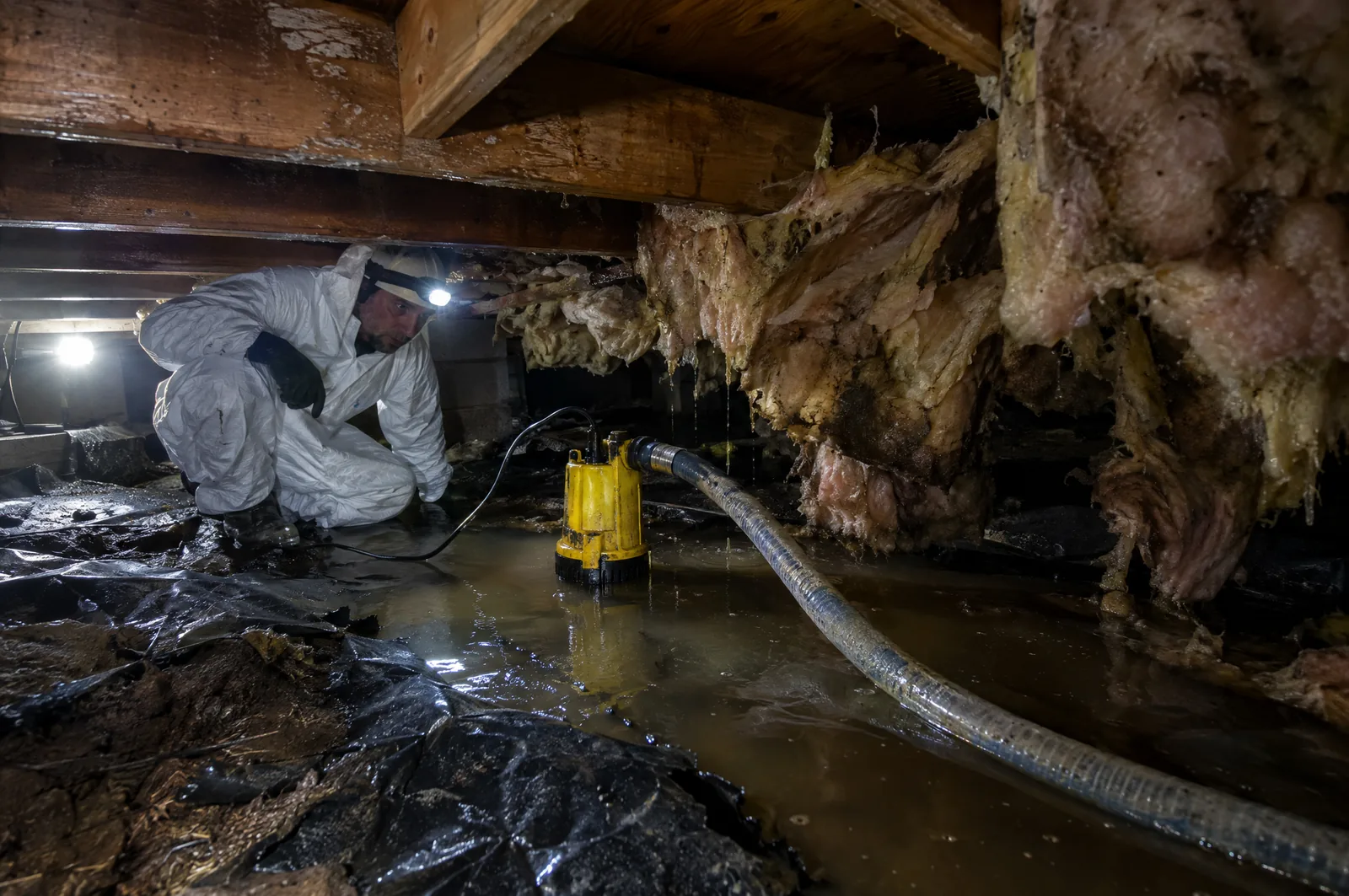
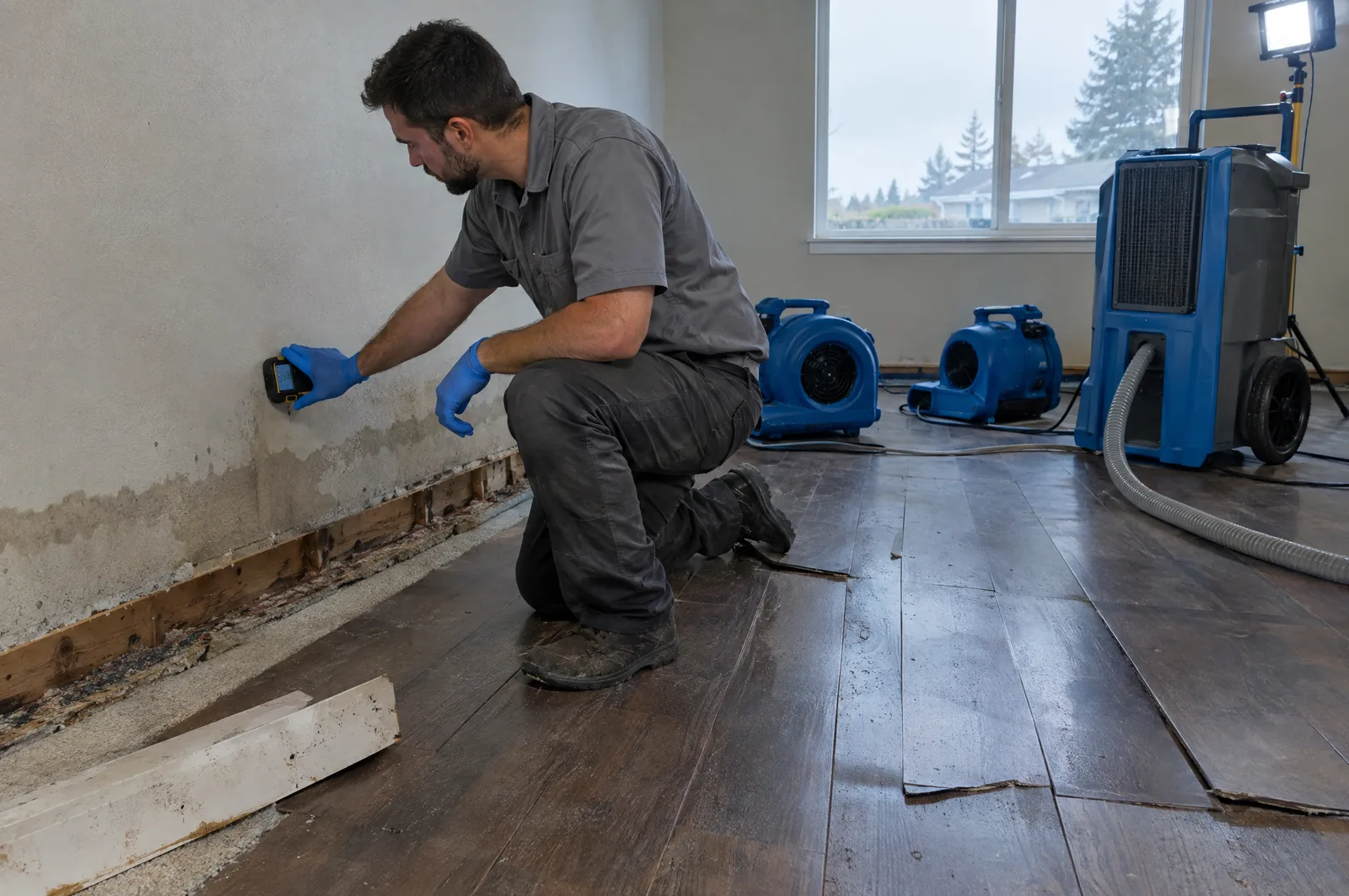
    We inspect the visible growth and then go looking for what caused it, with moisture meters, thermal imaging, and humidity readings, including under the house, which in Tumwater is where the answer usually is. We map the extent of affected material, which is regularly larger than the visible patch because growth follows moisture inside the assembly. You get a written scope with the suspected source stated plainly, and if the source is outside what we do, such as a roof or a plumbing repair, we say so.

  2. Step 2

    Containment And Negative Air

    The work area is sealed with barriers, HVAC supply and return in that zone are shut down and sealed so the system cannot carry spores through the house, and negative air machines with HEPA filtration bring the area to lower pressure than the surrounding space. Air then flows into containment rather than out of it. Entry is through a decontamination route. This goes up before any material is disturbed, because disturbing mold without containment is worse than leaving it alone.

  3. Step 3

    Removal And Cleaning

    Porous material with growth in it, drywall, insulation, carpet and pad, and affected wood products that cannot be cleaned, is removed and bagged inside containment. Semi-porous and non-porous surfaces such as framing, concrete, and metal are HEPA vacuumed and cleaned rather than demolished where cleaning will genuinely work. Everything removed is photographed and logged before it leaves the containment.

  4. Step 4

    Treatment And Drying

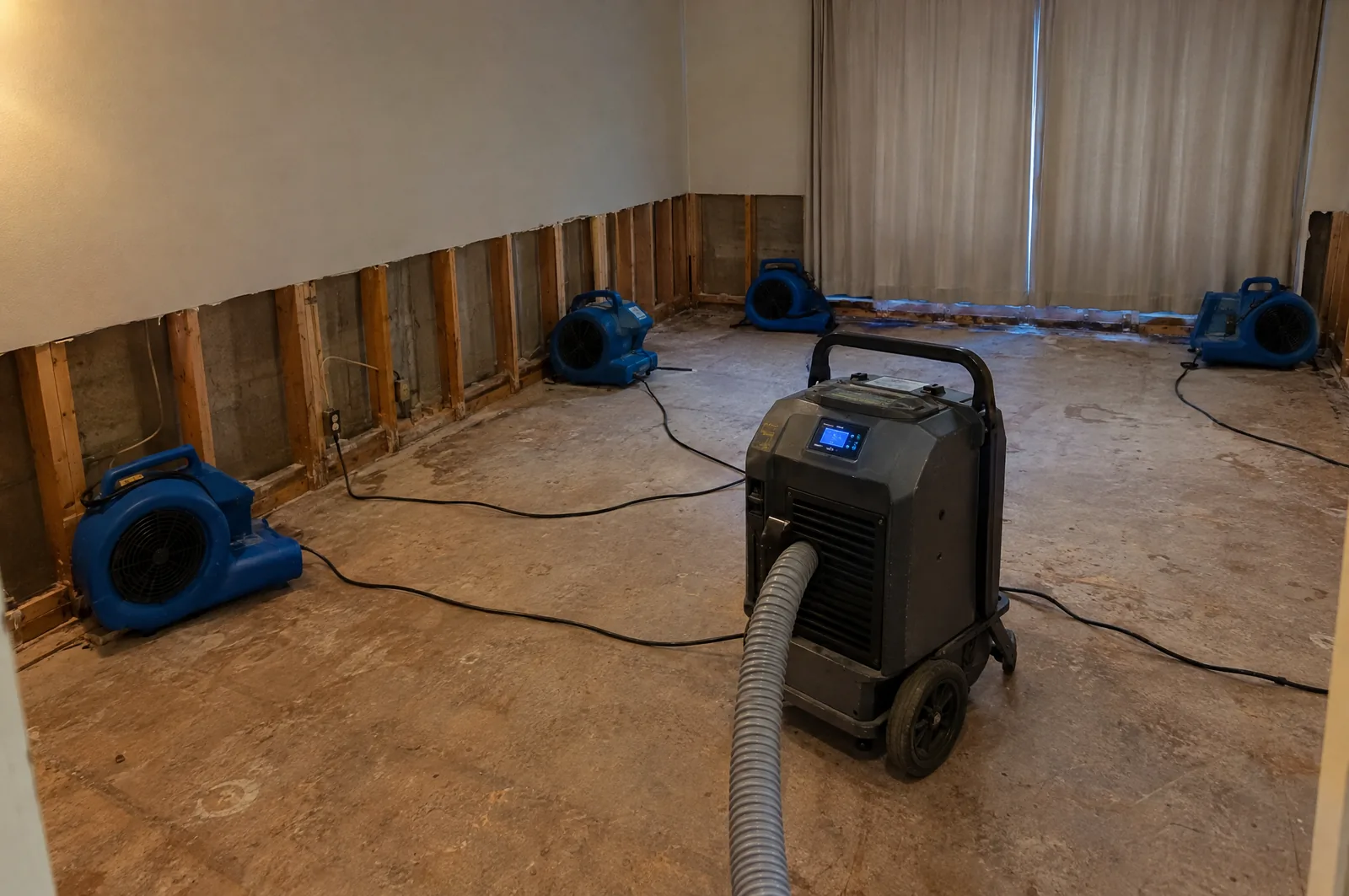
    Remaining surfaces get HEPA vacuumed and treated with an antimicrobial, and the space runs under HEPA filtration. Then we dry: the materials that stayed have to reach dry standard with readings to prove it before anything is closed up. Closing a wall on damp framing restarts the entire problem inside a cavity where nobody will see it until it smells.

  5. Step 5

    Verification And Reopening

    Before containment comes down we verify the area visually and by moisture reading. For larger jobs, health-sensitive occupants, or any situation where you want the result independently confirmed, we coordinate third-party clearance testing, and we recommend it, because the company that did the work should not be the only one certifying it. You receive the photo documentation, the moisture logs, the scope of what was removed, and the clearance result.

24/7 Emergency Response

Ready For Mold Removal & Remediation?

Call now for 24/7 emergency response across Thurston County. IICRC-certified technicians, insurance handled.

FAQs

Mold Removal & Remediation Questions From Tumwater Homeowners

  • Not always. If mold is visible and you know where the water came from, testing before the work often tells you something you already know and delays the remediation. Testing earns its cost when growth is suspected but not visible, when you need to know the extent inside an assembly, when there is a health concern or a dispute with a landlord, insurer, or seller, or when you want a pre-work baseline to compare clearance against. We will tell you which situation you are in rather than selling testing by default.

  • On a hard non-porous surface like tile or a tub surround, household cleaning handles a small amount of surface growth fine. On porous material like drywall or framing it does not work, because the growth extends into the material and bleach is mostly water that does not penetrate, so you kill the surface and leave the roots in a substrate you have just added moisture to. The other issue is that scrubbing sends spores airborne with no containment, spreading the problem to rooms that were clean.

  • Generally the affected material plus a margin past where growth is found, because growth is nearly always somewhat larger than what is visible. It is usually less than people fear. We are not looking to demolish more of your house than the situation requires, and we will show you the moisture readings and the growth line the scope is based on rather than asking you to take it on faith.

  • It depends on the cause and on your policy language. Mold resulting from a sudden covered water loss that was addressed promptly is often covered, frequently with a sub-limit that is lower than people expect. Mold from long-term seepage, groundwater, deferred maintenance, or a leak that went unreported is typically excluded. Documenting the source properly is what determines which conversation you are having, so we do that carefully and give you our honest read on it.

  • Yes, more than most people assume. Air moves upward through floor penetrations from the crawlspace into the living space, carrying humidity and spores with it. A significant share of the air you breathe in a home over a vented crawlspace has come up from underneath. It is a common reason for an unexplained musty smell in a house where nothing visible is wrong upstairs.

  • A contained single-room job is often two to four days including drying. Larger jobs, crawlspace remediation, and anything requiring clearance testing turnaround run longer. Drying time in this climate is the variable that moves most, because materials give up moisture more slowly here than the same job would elsewhere.

24/7 Emergency Restoration

Don't Wait. Call Now.

Open 24/7 - Emergency Dispatch

Tap To Call (877) 524-6411